
Introduction
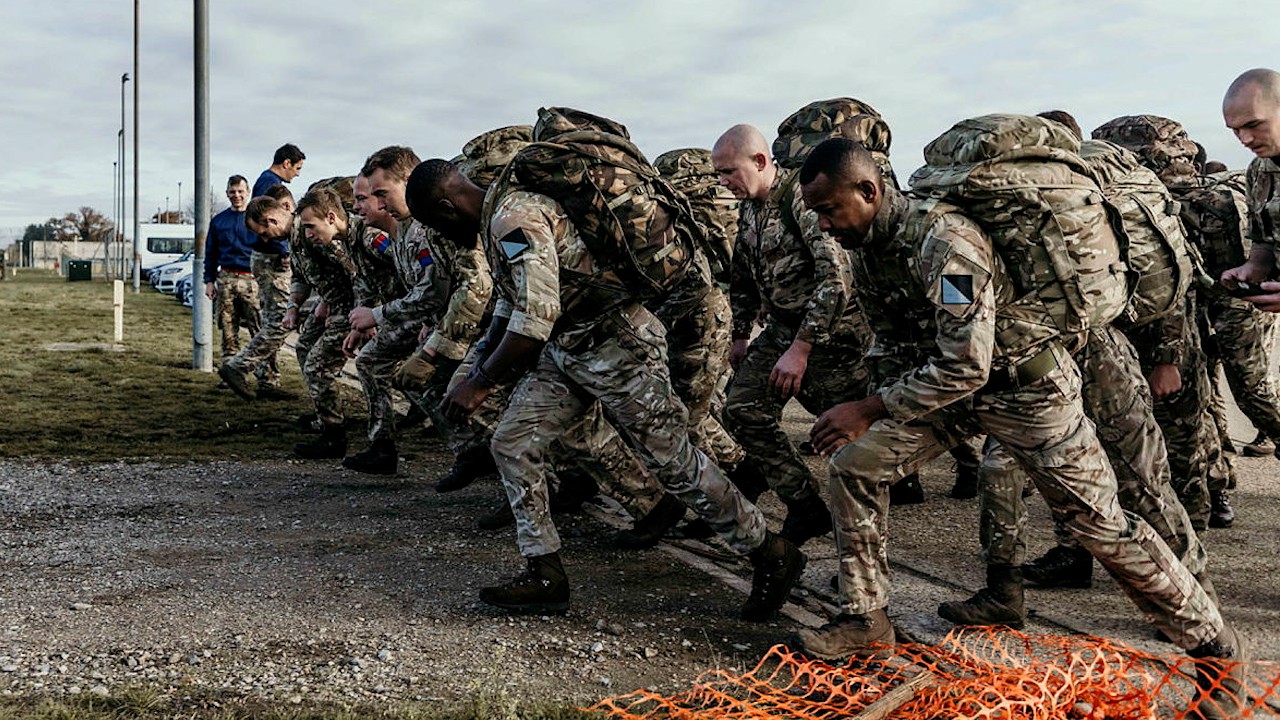
A military backpack, often called a “rucksack,” is much more than just a bag—it’s a reliable tool designed to endure the toughest conditions.
Built for combat, field operations, and tactical missions, these backpacks prioritize durability, efficient load distribution, and modularity to support soldiers in demanding environments.
But why should you, as a bulk buyer, care about these details?
Whether you’re purchasing for retail, wholesale, or personal needs, understanding the terminology, key types, and essential features of military backpacks can help you make informed, cost-effective decisions. Stick with us as we break down what truly makes a rucksack stand out.
As a bulk buyer sourcing for retail or wholesale, understanding military backpack terminology, types, and features ensures cost-effective decisions. Explore our comprehensive backpack categories for mission-ready designs.
Key Terminology and Regional Names
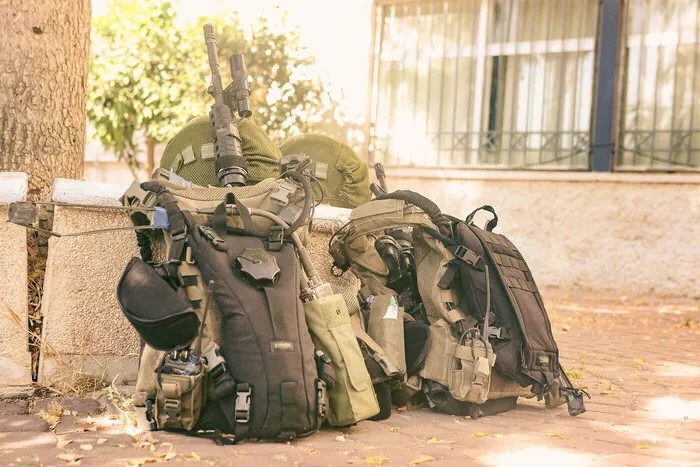
When discussing military backpacks, understanding the specific terminology is crucial. These names often highlight the pack’s purpose, size, or even its regional variations. Let’s break it down:
A. Universal and Official Terms
- Rucksack:
- The most recognized term for a large, durable military pack.
- Designed to carry 50+ lbs of gear, making it ideal for extended missions.
- Widely used by NATO forces and the U.S. Army, emphasizing toughness and practicality.
- Field Pack:
- A utility-focused backpack primarily used for field exercises or combat scenarios.
- Often equipped with MOLLE webbing for attaching modular gear, enhancing organization and accessibility.
B. Regional and Branch-Specific Names
- Bergen (UK/Commonwealth):
- A frame-based rucksack, commonly used by British forces.
- Known for its durability and capacity, making it ideal for patrols and extended missions in rugged terrain.
- Assault Pack:
- A smaller, lightweight pack, typically ranging from 15–30 liters.
- Designed for carrying quick-access essentials like ammunition, first aid kits, or snacks during short missions.
- A lightweight pack (15-30L) for quick-access essentials during short missions. Discover tactical variants in our tactical bag collection.
- Haversack (Historical):
- A term rooted in history, referring to single-strap packs used in earlier military operations.
- While largely replaced by modern designs, it’s still referenced in historical contexts and discussions about traditional gear.
By knowing these terms, you can better identify and communicate your needs when sourcing military backpacks, whether for retail or specialized use.
Types of Military Backpacks by Function
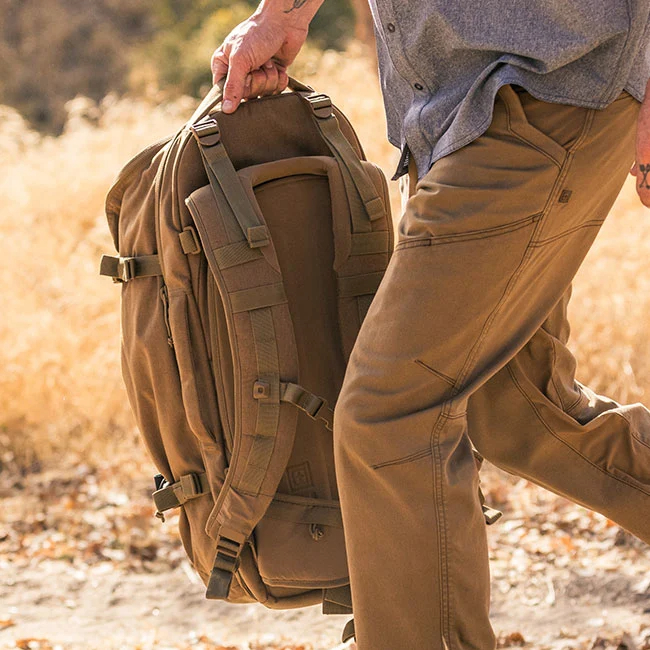
Military backpacks are not one-size-fits-all—they’re designed to meet specific operational needs. From carrying heavy loads over long distances to supporting medics in the field, each type has distinct features and uses. Let’s explore the key types:
A. Main Field Rucksacks
- Frame Rucksacks
- Purpose: Built for extended missions lasting 3+ days.
- Features: Equipped with internal or external frames to support heavy loads, typically 60–100 lbs. These frames distribute weight evenly, reducing strain on the back and shoulders.
- Examples:
- U.S. Army MOLLE 4000: A modular system designed for versatility and comfort.
- British Osprey MTP Bergen: Popular for its durability and ample storage, commonly used by British forces.
- Built for 3+ day missions with 60-100 lb capacity. See OEM options like the U.S. Army MOLLE 4000 through our backpack manufacturing services.
- Frameless Rucksacks
- Purpose: Ideal for short patrols or urban operations where agility and speed are priorities.
- Features: Lightweight design, usually weighing 2–4 lbs empty, and streamlined for quick movement.
- Examples:
- USMC ILBE Assault Pack: A compact solution for carrying essential gear without added weight.
B. Specialized Variants
- Assault Pack
- Purpose: A compact, secondary pack designed for short missions or carrying quick-access items.
- Capacity: Typically ranges from 15–25 liters.
- Use Case: Great for ammunition, first aid kits, or mission-critical tools.
- Medical Pack
- Purpose: Designed specifically for military medics to organize trauma kits and medical supplies.
- Features: Includes compartments and pouches to quickly access equipment during emergencies.
- Parachutist Pack
- Purpose: Tailored for airborne operations, ensuring gear stays secure during jumps.
- Features: Reinforced materials and a low-profile design prevent snagging and ensure durability under extreme conditions.
- Reinforced for airborne operations. For weather-resistant versions, partner with our waterproof bag factory.
By understanding these functional categories, bulk buyers can choose the right type of military backpack for their target audience, whether it’s for rugged field missions or specialized tasks.
Design and Structural Features
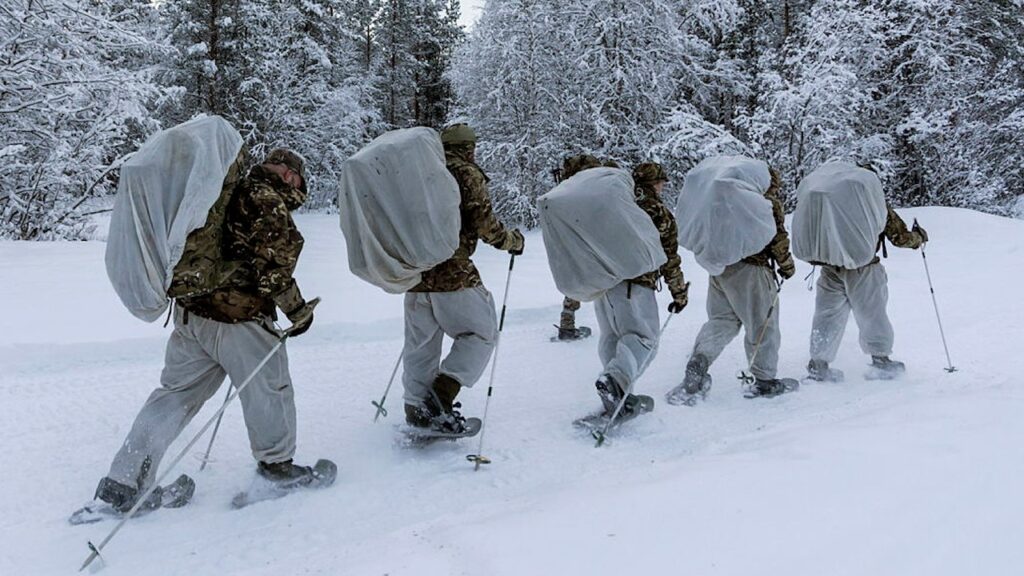
Military backpacks are engineered for extreme functionality and long-term durability.
Their design focuses on comfort, adaptability, and efficient organization, ensuring they meet the demands of rugged environments and intense operations. Let’s break down the key structural features:
A. Core Components
- Materials and Durability
- Military backpacks are made with military-grade fabric, such as 500D–1000D Cordura nylon.
- These materials are known for their abrasion resistance, water repellency, and ability to withstand harsh conditions.
- Heavy-duty closures, zippers, and reinforced stitching further enhance durability, ensuring the pack can handle heavy loads and constant use.
- Military-grade 500D–1000D Cordura nylon with water-repellent coatings. Source compliant materials via our product catalog.
- Load-Bearing Systems
- Padded hip belts and ergonomic shoulder straps distribute weight evenly, reducing strain and fatigue during long missions.
- Ventilated back panels improve airflow, keeping the wearer comfortable in hot or humid environments.
- These features are essential for carrying heavy loads, often exceeding 50–100 lbs, over extended periods.
B. Modularity and Organization
- MOLLE Webbing
- A defining feature of military packs, MOLLE webbing is an external grid system that allows users to attach pouches, tools, or additional gear.
- This modularity ensures the backpack can be customized for different missions, whether it’s carrying ammunition, medical supplies, or survival tools.
- Compartmentalization
- Military backpacks are designed with multiple compartments and internal pockets to keep gear organized and easily accessible.
- This structure is crucial for storing mission-critical items like maps, radios, or food without creating unnecessary clutter.
By combining durable materials, comfortable load-bearing systems, and modular organization, military backpacks are built to handle the toughest challenges, making them a reliable choice for both tactical missions and civilian uses. What Is a Military Backpack Called
Historical Evolution
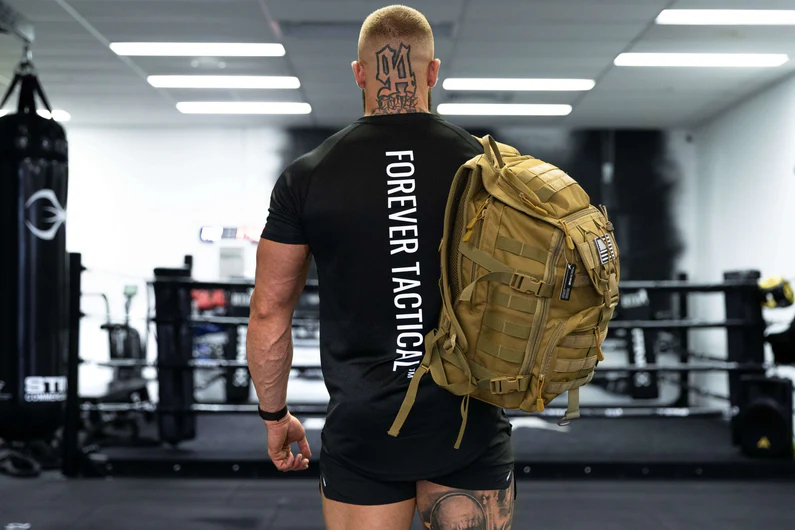
Military backpacks have undergone significant changes over the years, evolving from simple utility packs to highly specialized gear designed for modern warfare. Here’s a look at how these designs have transformed over time:
A. Early Designs (1900s–1970s)
- Canvas Rucksacks
- During World War I and World War II, military backpacks were made from heavy canvas.
- These early designs were simple, durable, and functional, but they lacked modularity and often became heavy when wet.
- Soldiers carried essentials like ammunition, food, and personal items in these packs.
- Aluminum Frame Packs
- In the Vietnam War, backpacks with external aluminum frames became the standard.
- These frames improved load distribution, allowing soldiers to carry heavier loads with less strain.
- However, these designs were still relatively bulky and less adaptable than today’s packs.
B. Modern Innovations (1980s–Present)
- MOLLE Systems (1990s)
- The introduction of MOLLE (Modular Lightweight Load-carrying Equipment) revolutionized military backpacks.
- This system featured nylon webbing grids that allowed soldiers to attach pouches, tools, and gear according to their mission needs.
- MOLLE packs replaced older ALICE (All-Purpose Lightweight Individual Carrying Equipment) systems, offering greater modularity and customization.
- Lightweight Materials (2000s)
- Advances in materials, such as 500D–1000D Cordura nylon, made backpacks lighter, more durable, and weather-resistant.
- Modern designs also prioritize ergonomics, with padded straps, hip belts, and ventilation systems for increased comfort during extended use.
- These innovations have made military backpacks versatile, appealing not only to soldiers but also to outdoor enthusiasts and civilians.
From canvas to cutting-edge materials, military backpacks have evolved to meet the needs of changing warfare and technology, ensuring they remain a vital tool for both soldiers and civilians alike.
Key Models and Issued Packs

Military backpacks vary significantly across forces and missions, with each model tailored for specific needs.
From standard-issue packs to specialized designs for elite forces, these backpacks combine functionality, durability, and adaptability. Here are some of the most notable examples:
A. U.S. Military Standard-Issue
- MOLLE II Rucksack
- Design: A modular system featuring a main rucksack and optional add-ons.
- Sizes:
- 3-day pack (30L) for short missions.
- 72-hour pack (60L) for extended operations.
- Features: Includes MOLLE webbing for customizable gear attachments, hydration pouch compatibility, and a durable frame for heavy loads.
- Use: Widely used by the U.S. Army for its versatility and rugged build.
- ILBE (Improved Load-Bearing Equipment)
- Design: Developed for the U.S. Marine Corps, featuring a 65L main bag and a detachable 20L assault pack.
- Features:
- Made from 500D Cordura nylon for durability.
- Designed for heavy loads while maintaining comfort through padded straps and a rigid frame.
- Use: Ideal for longer missions, offering ample space for equipment and supplies.
B. International and Special Forces Models
- British Army Bergen
- Design: A massive 80L frame rucksack designed for long missions in harsh environments.
- Features:
- An external frame for better load distribution.
- Durable materials to withstand heavy use in rugged terrains.
- Use: Commonly issued to British forces for patrols and extended field missions.
- SAS Tactical Packs
- Design: Lightweight packs with a capacity of 40–50 liters, emphasizing stealth and mobility.
- Features:
- Compact design for quick movement.
- Multiple compartments for efficient organization of gear.
- Use: Preferred by Special Air Service (SAS) and other elite units for operations requiring speed and agility.
- 40-50L stealth-focused designs. Customize similar models through our tactical bag division.
From the modular MOLLE II to the robust British Bergen, these military packs are a testament to the importance of tailoring gear to specific missions.
For bulk buyers, understanding these key models can help identify the right products for their audience, whether for military use or civilian applications.
Differences between Civilian and Tactical Backpacks
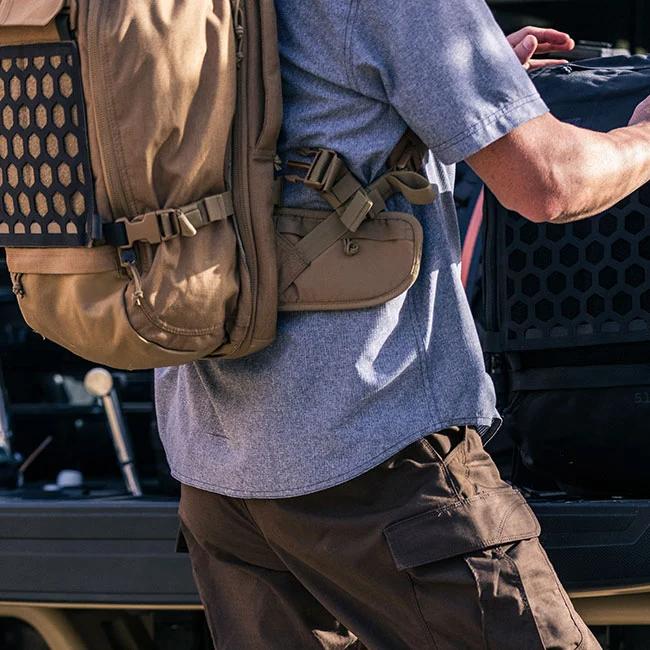
Military backpacks stand out from civilian and even tactical backpacks due to their rugged construction, versatility, and ability to meet combat-level demands. Let’s explore the differences in detail:
A. Military vs. Civilian Backpacks
| Feature | Military Backpacks | Civilian Backpacks |
| Durability | Built to last through combat and harsh conditions, with a lifespan of 10+ years. | Designed for daily use, typically lasting 2–5 years. |
| Load Capacity | Capable of carrying 50–100+ lbs for extended missions. | Limited to 20–40 lbs for lighter, everyday needs. |
| Modularity | Equipped with MOLLE webbing for attaching pouches, tools, and tactical gear. | Limited to basic compartments and pockets. |
| Weight | Heavier, weighing 4–8 lbs empty due to durable materials and frames. | Lightweight, typically 1–3 lbs empty with no frame. |
Key Takeaway: Military backpacks prioritize durability, modularity, and the ability to handle heavy loads, while civilian backpacks focus on convenience and lightweight designs for everyday use.
B. Military vs. Tactical Backpacks
True military packs (e.g., MIL-STD-810 compliant) exceed civilian-grade tactical bags. Verify standards with our backpack manufacturer team.
- Tactical Backpacks
- Design: Civilian-friendly versions inspired by military packs, often used for hiking, camping, or range shooting.
- Example: 5.11 Tactical Rush 72, known for its modularity and storage but not military-spec tested.
- Durability: Built tough, but not subjected to strict military standards.
- Military Backpacks
- Design: Designed to meet exacting military specifications for extreme durability and performance.
- Example: MIL-STD-810 compliant backpacks, which are tested for harsh conditions like heat, cold, and impact.
- Features: Includes combat-grade materials, reinforced stitching, and modular systems like MOLLE webbing.
Key Takeaway: Tactical backpacks are ideal for civilians seeking military-inspired designs, while true military backpacks are battle-tested for the toughest missions.
By understanding these differences, bulk buyers can better tailor their offerings, whether their audience consists of outdoor enthusiasts, tactical gear fans, or military personnel.
Why Partner with Pecbag for OEM/ODM Custom Belt Bags and Pouches?
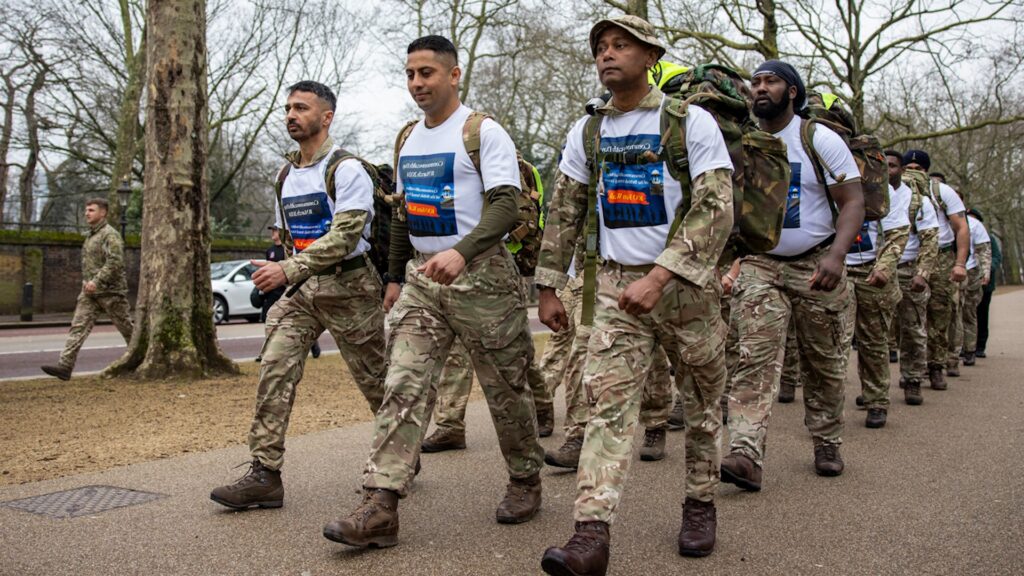
If you’re looking for a trusted partner to manufacture custom belt bags, pouches, and other tactical accessories, Pecbag is the solution.
With deep expertise in military-grade manufacturing and a commitment to meeting bulk buyers’ needs, Pecbag stands out as a reliable and innovative partner. Here’s why:
A. Expertise in Military-Grade Manufacturing
- Specialized Production:
- Pecbag specializes in creating durable, functional, and customizable bags that adhere to military standards.
- These products are designed to withstand extreme conditions, ensuring long-lasting performance.
- Proven Track Record:
- Years of experience working with bulk buyers across industries.
- Expertise in tailoring designs to meet specific operational or commercial needs, whether for military use, outdoor gear, or retail.
B. Customization Options
- Diverse Features:
- Choose from a variety of materials (e.g., Cordura nylon, high-density polyester), sizes, and modular features like MOLLE webbing and reinforced straps.
- Perfect for industries ranging from military and tactical gear to outdoor recreation and e-commerce.
- Improved Designs:
- Pecbag can replicate existing designs or improve upon them for optimal performance.
- Custom pouches and belt bags can be tailored for specific use cases, such as medical kits, tool storage, or travel convenience.
C. Commitment to Quality and Cost-Effectiveness
Premium Cordura nylon and reinforced stitching ensure combat readiness. Request material swatches from our product hub.
- Premium Materials:
- Use of top-tier materials like 500D–1000D Cordura nylon, metal hardware, and reinforced stitching ensures durability and reliability.
- Built for both functional use and aesthetic appeal, making them versatile across markets.
- Competitive Pricing:
- Pecbag offers cost-effective solutions for bulk orders without compromising quality.
- Ideal for businesses seeking high-quality products at reasonable prices to maximize profit margins.
D. Streamlined Production and Delivery
Global shipping for bulk tactical orders. Start with our backpack prototyping service.
- Efficient OEM/ODM Processes:
- Pecbag’s well-optimized production workflows ensure quick turnaround times, even for large-scale orders.
- Flexibility in design adjustments during the manufacturing process.
- Global Shipping:
- Capable of delivering to international clients, ensuring reliable logistics for buyers worldwide.
- Whether you’re based in North America, Europe, or Asia, Pecbag has you covered.
Partnering with Pecbag means access to top-tier expertise, endless customization options, and a commitment to quality that exceeds expectations.
If you’re ready to bring your vision to life or scale your business with reliable products, Pecbag is here to help. Let’s work together to create the perfect custom belt bags and pouches for your audience!
Conclusion
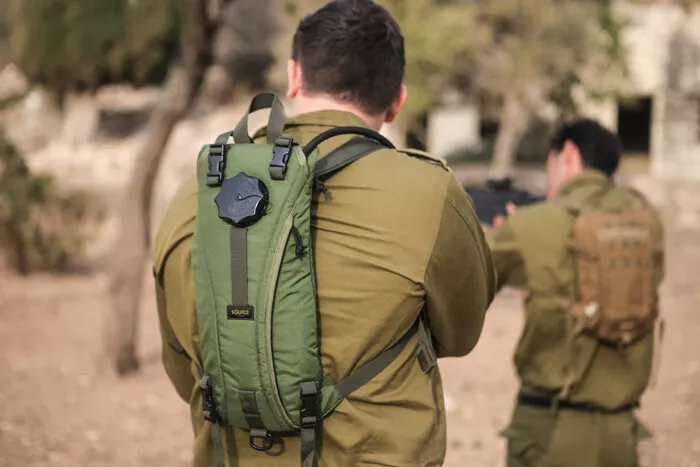
A. Key Takeaways
Military backpacks, commonly referred to as “rucksacks,” are the gold standard for durability, modularity, and load capacity.
From frame-based rucksacks for extended missions to assault packs for quick operations, their terminology and designs vary depending on their region and purpose. Understanding these differences is key to choosing the right pack for specific needs.
B. Choosing the Right Term
- Use “rucksack” for large, frame-based backpacks designed to carry heavy loads over long distances.
- Opt for “assault pack” when referring to compact, quick-access bags meant for short missions or secondary use.
- Refer to “field pack” as a general term for utility-focused military backpacks used in various scenarios.
C. Why They Matter
Military backpacks aren’t just gear—they’re a benchmark for durability and design, influencing the creation of civilian tactical gear and outdoor equipment.
For bulk buyers, their reliability, adaptability, and long-term value make them an excellent investment. Whether for military, tactical, or outdoor markets, military-inspired backpacks meet the highest standards, ensuring they remain a versatile and trusted choice.
Military backpacks set the durability benchmark for tactical and outdoor markets. Source authentic rucksacks or develop custom solutions:
- Browse 100+ ready-made designs
- Commission specialized tactical gear
- Consult our OEM backpack experts
Ready to source the best military backpacks or explore custom options? Partner with experts like Pecbag to bring quality and innovation to your offerings!




 English
  Spanish
  German
  French
  Russian
  Portuguese
  Italian
  Polish
  Swedish
  Finnish
  Danish
  Greek
Greek